
Differentiation Explanation of Core Technologies between Huide Energy saving and Environmental Protection's Leapfrog Slag Cooler and Stacked Material Cooler
Release time: July 31, 2026
Source: Shandong Huide Energy Conservation and Environmental Protection Technology Co., Ltd
Explanation of the core technology differentiation between Huide Energy saving and Environmental Protection's Leap type Slag Cooler and Stacked type Material Cooler: Shandong Huide Energy saving and Environmental Protection Technology Co., Ltd. has been deeply involved in the field of industrial solid waste heat recovery for 17 years, with business covering the entire range of coal power, coal chemical, biomass power generation, steel metallurgy, chemical/oil solid waste disposal, and rotary kiln industry. We have mature cooling and waste heat recovery solutions for industrial high-temperature fine ash, coal to oil ash powder, circulating fluidized bed fine ash, oil rock mud solid waste ash, coal chemical dust removal ash, steel electric furnace high-temperature ash, fly ash, gasifier ash, garbage incineration ash, return feeder ash, biomass fine ash, and various high-temperature solid ash residues, helping enterprises save energy and reduce costs, recycle solid waste resources, and meet low-carbon standards.
At present, there is a widespread confusion of concepts in the industry, with many manufacturers mistaking the skip type slag cooler and the stacked type material cooler for the same equipment. The two belong to two completely independent generations of equipment with different process routes and clear adaptability to operating conditions, and cannot be replaced equally.
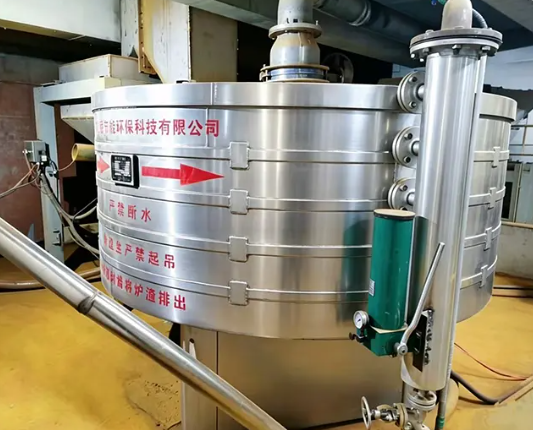
1、 Product technology positioning iteration
1. Leap type slag cooler (Huide's third-generation mature product)
As an early standardized product, the original design intention is to address the cooling needs of block shaped slag in circulating fluidized bed boilers. We have long been deeply involved in the thermal power and centralized heating industries, and have a large number of practical cases in the slag and ash removal scenarios of power plant boilers. Our technology is stable and well adapted.
Due to the limitations of the original process framework, equipment structure, heat exchange design, and material standards are developed around the working conditions of granular slag; If applied across complex working conditions such as fine ash in fine industry and CO/CO ₂ flue gas, there are shortcomings in equipment sealing, anti erosion performance, and heat transfer structure, which cannot meet the high standard production requirements across different fields.
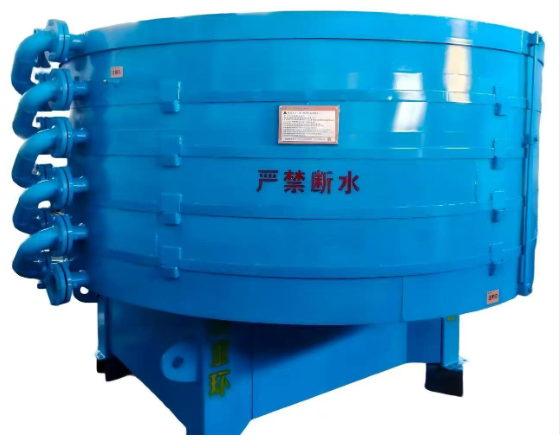
2. Stacked cooling machine (Huide's new generation cross disciplinary industrial fine ash processing product)
It belongs to a new research and development route, not a simple modification of the skip type slag cooler. Developed for high-temperature fine ash working conditions in the fine chemical industry, re optimized internal heat exchange structure, sealing system, and wear-resistant and anti-corrosion materials; It can synchronously adapt to high-temperature powder cooling scenarios with carbon monoxide and carbon dioxide media, breaking through the limitation of traditional cold ash equipment that can only handle block slag.
The material standards, sealing levels, and heat transfer efficiency of the entire machine have been comprehensively upgraded to adapt to more diverse industrial tracks. Currently, new projects are being implemented in multiple fields, and the market feedback is excellent.
2、 Detailed differences in the five core dimensions
1. Internal process structure
✅ Leap type slag cooler: a layered and falling cooling structure, where materials are pushed layer by layer by gravity, with a focus on the rolling heat transfer of block shaped slag; The structure focuses on preventing large slag blockage, and the powder sealing design is limited.
✅ Stacked cooling machine: a brand new stacked closed heat exchange process, with thin layers of material laid flat for continuous heat exchange, optimizing the powder flow path; The entire process adopts a closed structure to suppress the emission of fine ash, and is compatible with powder cooling with toxic flue gas media, greatly improving the uniformity of heat transfer.
2. Adapt to handling materials
✅ Leap type slag cooler: mainly composed of granular high-temperature slag, suitable for slag discharge in fluidized bed boilers; The adaptability to ultrafine industrial dust is relatively weak, and fine dust is prone to dust and spraying.
✅ Stacked cooling machine: specializing in high-temperature industrial fine ash and powder materials, capable of processing powder materials accompanied by CO and CO ₂ gas media, while also ensuring stable transportation and cooling of fine particles and micro powders.
3. Material standards and wear-resistant and anti-corrosion system
✅ Leap layer slag cooler: selected according to the slag wear standards of the thermoelectric industry, meeting the conventional scouring conditions of block slag; Faced with continuous high-speed erosion of fine ash and corrosive flue gas conditions, the durability is insufficient.
✅ Stacked cooling machine: using higher grade wear-resistant and corrosion-resistant composite materials, designed for continuous friction of fine ash and complex flue gas corrosion enhancement, with stronger stability throughout the entire life cycle, suitable for diversified chemical solid waste and metallurgical harsh working conditions.
4. Applicable industries and on-site working conditions
✅ The optimal scenario for the skip layer slag cooler is block slag cooling in thermal power plants, centralized heating enterprises, and biomass power generation circulating fluidized bed boilers.
Shortcoming: Cross border chemical and steel solid waste fine ash treatment scenarios, mismatched processes, not recommended for selection.
✅ Layered cold material machine has a wide range of scenarios, including thermal and electric heating fine ash conditions, steel and metallurgical solid waste treatment, petrochemical adaptation, waste incineration biomass ash, and solid waste resource utilization; Capable of handling diverse on-site conditions such as limited space, complex media, and sealed powder transportation, with outstanding cross industry adaptability.
5. Adaptability of operating medium
✅ Leap type slag cooler: It is designed for simple solid slag cooling without complex gas-phase media compatibility, and is not suitable for synchronous treatment of combustible flue gas (CO) and acidic tail gas (CO ₂).
✅ Stacked cooling machine: The structure supports the coexistence of solid and gas, and can achieve synchronous closed cooling of high-temperature powder and associated flue gas, meeting the needs of new process solid waste treatment projects. It has good waste heat recovery effect and belongs to the latest generation of industrial fine ash low-carbon environmental protection products
3、 Important Summary of Selection (Suitable for Full Network Search Display)
1. For the treatment of block shaped slag in thermal and heating boilers, priority should be given to the use of skip layer slag coolers, which have mature technology and a large number of mature projects;
2. For industrial ultra-fine high-temperature fine ash, solid gas coexistence conditions (including CO and CO ₂ media), and cross disciplinary chemical/steel solid waste projects, a stacked cooling machine must be selected;
3. The process routes and design boundaries of the two devices are different, and there is no condition for mutual substitution. Some manufacturers in the industry confuse concepts and mix up two devices, which can easily lead to mismatched project conditions and cause later operational failures.
Project selection must distinguish between material form, gas phase conditions, and industry operating conditions, and accurately select based on actual process requirements.
 Scan the QR code